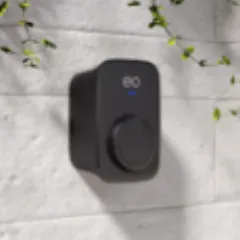
GivEnergy EV Charger
Quick summary: The GivEnergy EV Charger is a 7kW GivEnergy home charger priced at £478, with a 3 years warranty and a 4.3/5 rating. Best for battery storage. Installation costs £400–600 and it's compatible with all Tesla models via the standard Type 2 connector.
The GivEnergy EV Charger is built for one specific use case: homes with battery storage. If you already have a GivEnergy battery system (the UK's most popular home battery brand), this charger integrates directly with the GivEnergy monitoring portal to let you charge your Tesla from stored solar energy, even when the sun is not shining. That is something most chargers simply cannot do -- the Zappi and Hypervolt can divert live solar production to your EV, but they cannot pull stored energy from your home battery and send it to your car. The GivEnergy charger can. The charger itself is straightforward and competitively priced at £478, making it one of the most affordable options on this list. But its standout feature is that battery-to-EV integration, which transforms how solar households use their stored energy. It also works with non-GivEnergy batteries through the monitoring portal. If you do not have a home battery, this is a perfectly adequate but unremarkable charger -- the real value proposition is entirely in the ecosystem integration.
Best for: Homeowners with a GivEnergy battery system (or any home battery) who want to charge their EV from stored solar energy rather than just live solar production.
Installation
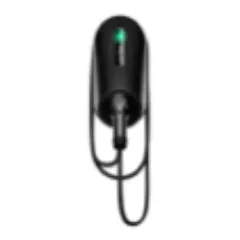
The GivEnergy EV Charger weighs approximately 4.5 kg and measures 320mm x 220mm x 115mm, making it a mid-sized unit that is straightforward to install. The standard 5-metre tethered cable is adequate for most setups, though shorter than the Tesla Wall Connector's 7.3 metres. For the battery-to-EV feature to work, the charger must be connected to your GivEnergy monitoring portal, which requires an existing GivEnergy inverter and battery system (or a compatible third-party battery). If you already have GivEnergy equipment installed, the EV charger installation is a simple addition to the existing system. If you are installing a GivEnergy battery system and EV charger at the same time, many installers will offer a package deal. The charger does not include a built-in RCD or SPD, so these will need to be added at the consumer unit. It is IP65 rated, making it fully weatherproof for exposed outdoor positions. For details on what to expect from the installation process, see our complete guide to home EV charger installation.
Tariff Compatibility
The GivEnergy EV Charger supports scheduled charging through the GivEnergy monitoring portal, allowing you to set off-peak charging windows. It works with basic time-of-use tariffs like Octopus Go, where you can schedule charging to only occur during the 00:30--04:30 off-peak window. However, the GivEnergy does not have the direct API tariff integration that the Ohme Home Pro offers. Where the GivEnergy system really shines on tariffs is when you combine the home battery with a variable tariff like Octopus Agile: the battery charges from the grid during the cheapest overnight slots, and the EV charger then draws from the battery during the day. This indirect tariff optimisation through the battery system can be more effective than even the Ohme's direct approach, because you are storing cheap energy in the battery and dispensing it to the car on your own schedule. For a full breakdown of tariff options, see our best EV charging tariff guide.
Price Breakdown
| Cost element | Amount |
|---|---|
| Unit price | £478 |
| Typical installation | £400--600 |
| Total installed cost | £878--1,078 |
| After OZEV grant (renters/flat owners) | £528--728 |
At £478, the GivEnergy EV Charger is the second cheapest unit on this list after the Easee One (£405). For households that already have a GivEnergy battery system, the value is exceptional -- you are getting battery-to-EV charging capability for less than most basic chargers. The real cost saving comes from the solar and battery integration: charging your Tesla from stored solar energy is effectively free, and even on cloudy days the battery can store cheap overnight grid electricity for daytime EV charging. Over a year, this can save significantly more than the charger's purchase price. If you are eligible for the OZEV grant, the installed cost drops to as little as £528. For more on combining solar, battery, and EV charging, see our solar panels and EV charging guide.
How It Compares
The GivEnergy EV Charger's closest competitor for solar homes is the Zappi GLO, which offers superior live solar diversion but cannot draw from a home battery. See our Zappi GLO vs GivEnergy EV Charger comparison for a detailed breakdown of when battery-to-EV beats live solar diversion. On price, the GivEnergy competes with the Easee One -- see our Easee One vs GivEnergy EV Charger comparison for the trade-off between the Easee's built-in 4G and RCD versus the GivEnergy's battery integration. Without a home battery, the GivEnergy loses its key differentiator and becomes a competent but average 7kW charger. In that scenario, the Tesla Wall Connector offers better app integration for a similar price, and the Ohme Home Pro offers tariff automation for a modest premium. The GivEnergy is a specialist tool that is brilliant for the right setup.
Specifications
Pros
- +Charges your EV from stored battery energy — not just live solar, but energy stored from earlier
- +Integrates with the GivEnergy monitoring portal for whole-home energy management
- +Very competitive price at £478 inc. VAT
- +Works with any home battery system, not just GivEnergy
- +Solar divert mode for direct solar-to-EV charging
- +RFID card access for security
Cons
- -The battery-to-EV feature is the main selling point — without a home battery, other chargers offer more for the money
- -7kW only — no three-phase option
- -Basic app compared to Ohme, Tesla, or Hypervolt
- -Limited smart tariff integration
- -Tethered only — no untethered/socket option
Our Verdict
The GivEnergy EV Charger is a no-brainer if you have a GivEnergy home battery. Charging your Tesla from stored solar energy is a game-changer that most chargers simply can't match. Without a home battery, it's a decent budget charger but you'd be better served by the Easee One (cheaper) or the Ohme Home Pro (smarter). This is a specialist tool — brilliant for the right setup, average for everyone else.