Updated — Leading fixed-rate products rechecked; E.ON peak pricing and ScottishPower meter-timing guidance updated.
Best EV Tariffs UK 2026: Eight Current Plans Compared
Buyer guide
EDF GoElectric at 6.99p/kWh now undercuts Octopus. The UK's EV tariffs compared, with real annual costs.
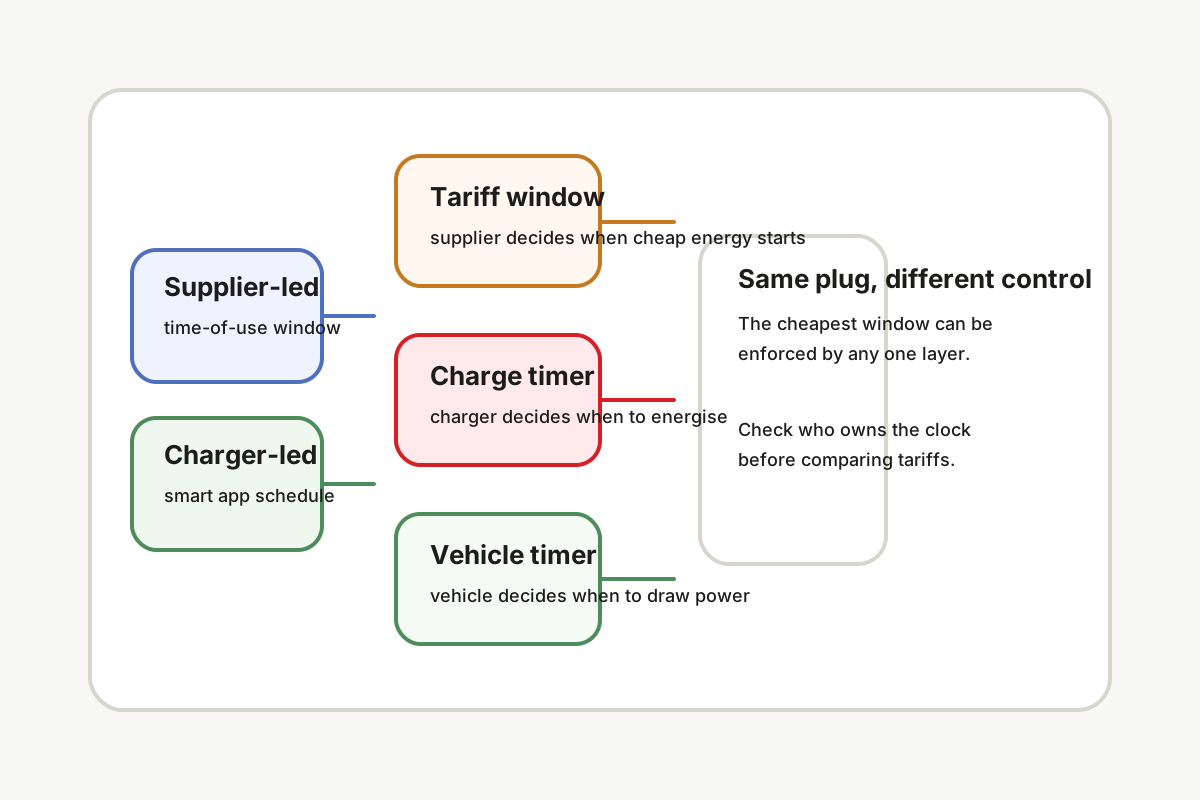
Off-peak charging can be controlled by the supplier, the charger, or the vehicle, and those routes do not behave the same way.
Source: Octopus Energy smart tariff guidance and EV tariff schedule documentation
The short answer
EDF GoElectric has the cheapest fixed overnight rate in this comparison at 6.99p/kWh across 11pm–6am. Octopus Intelligent Go costs 8p/kWh and adds managed scheduling. On the shared default model, their EV-electricity estimates are £200 and £229 a year.
The tariff matters more than the charger does: the standard rate is 26.11p/kWh, so the gap between a good off-peak window and none at all is £500–550 a year for an average driver. The hardware decisions are second-order.
The major UK EV tariffs all sell cheap overnight electricity. Where they differ is in how the scheduling works, which chargers they pair with, and whether the peak rate bites.
At a glance
| Tariff | Off-peak rate | Off-peak window | Smart charging |
|---|---|---|---|
| EDF GoElectric | 6.99p/kWh | 11pm–6am | No, use a timer |
| Octopus Intelligent Go | 8p/kWh | 11:30pm–5:30am | Eligible vehicle or charger |
| E.ON Next Drive Smart | 8p/kWh | 12am–6am | Eligible vehicle, zappi or Hypervolt |
| Octopus Go | 8.5p/kWh | 12:30am–5:30am | No, use a timer |
| ScottishPower EV Saver | 8.5p/kWh | 12am–5am* | No, use a timer |
| British Gas EV Power | 9p/kWh | 12am–5am | Base tariff uses a timer; Power+ requires compatibility |
| OVO Charge Anytime | 14p/kWh | Managed before ready-by | Compatible vehicle or charger |
| Octopus Agile | Variable | Half-hourly | Automated scheduling strongly preferred |
Rates checked 10 August 2026. ScottishPower says some meters follow GMT, which can move the apparent EV Saver clock window by one hour during BST. Peak rates and standing charges vary by product and region.
The lowest headline off-peak rate isn't always the cheapest overall — peak rates and standing charges matter, especially if you top up during the day. The average UK public rapid charger runs at 79p/kWh, so even a standard home tariff is around 70% cheaper than public alternatives.
EDF GoElectric
GoElectric is the cheapest fixed overnight rate in the UK: 6.99p/kWh from 11pm to 6am, seven hours, whole-home. At 10,000 miles that is £200 a year of charging against £746 on the standard variable rate — a saving of £546, more than any other tariff here returns.
There is no vehicle API and no dynamic scheduling. You set a timer on the car or the charger and it runs. The seven-hour window is long enough that most drivers never need to think about it: at 7 kW it takes on 49 kWh a night, which covers a full charge on all but the largest batteries.
The trade-off is the peak rate at 28.91p/kWh, above the Ofgem cap. GoElectric pays best in a household that can keep the heavy loads overnight.
Octopus Intelligent Go
Intelligent Go is no longer the cheapest, but it is still the least demanding. Plug in when you get home, set a ready-by time, and Octopus schedules charging at the cheapest and greenest points in the 11:30pm–5:30am window without any input from you. The off-peak rate of 8p/kWh covers the whole home, not just the charger, so the dishwasher and washing machine fit comfortably inside it.
Since 7 May 2026 there is a ceiling on the automation: smart-scheduled EV charging is capped at six hours in any 24-hour period, measured midday to midday. The bonus daytime slots still appear, but they move the cheap half-hours around rather than adding to them. Overflow bills at the peak rate.
You need a smart meter and a compatible EV or charger — every UK Tesla qualifies, as do Ohme, Wallbox, Hypervolt and Indra units. At 10,000 miles the saving against the standard rate is £517 a year; the interactive savings calculator does the maths for your mileage.
The natural pairing is the Ohme Home Pro — the officially recommended charger, with direct integration. A Tesla on its own will also work natively without any specific charger, which makes the Tesla Wall Connector at £475 a sensible default.
Octopus Go
Octopus Go is the simpler sibling: a flat 8.5p/kWh between 12:30am and 5:30am, no API, no automatic scheduling. You set a timer on the car or charger to start and stop. It works with any EV and any charger — basic units included — which makes it the right pick when the setup is modest, or when the EV isn't on Intelligent Go's compatibility list.
Annual saving against a standard rate is £503 — a little under Intelligent Go because of the higher off-peak rate and shorter window. The Tesla Wall Connector handles scheduling natively through the Tesla app, which is the path of least resistance.
British Gas EV Power
British Gas EV Power runs at 9p/kWh during 12am–5am. Its base tariff works with any timed charger. British Gas also markets Power+ for compatible smart-charging setups, which can change the result. Compare the peak rate and standing charge in the postcode quote rather than assuming either sits below the current cap.
It is worth a look if you are already a British Gas customer or qualify for the Power+ route. On the base charging rate alone, EDF and both Octopus tariffs beat it. The British Gas vs Octopus comparison shows where supplier continuity and peak household use can narrow the gap.
E.ON Next Drive
Next Drive now has two routes. The Smart variant offers 8p/kWh during 12am–6am and can allocate the same whole-home rate during managed daytime charging. It connects through a compatible EV or a supported zappi/Hypervolt charger. The standard variant is 9p over the fixed six-hour window and works with any scheduled charger.
The representative peak rate and standing charge are both material. Use the Smart route when the connection already fits the car or driveway; otherwise EDF supplies a lower fixed rate without an eligibility layer.
ScottishPower EV Saver
EV Saver provides 8.5p/kWh during a five-hour fixed window and works with any scheduled charger. Existing ScottishPower customers need a single-rate smart meter that sends half-hourly readings and monthly Direct Debit.
The unusual detail is clock time. ScottishPower says many meters follow GMT, so the apparent window can move from midnight to 5am in winter to 1am to 6am during BST. Selected SMETS1 meters keep the same clock hours. Check the meter-specific timing before programming the car.
OVO Charge Anytime
Charge Anytime uses 14p/kWh pay as you go for eligible managed charging. Instead of a fixed window, it schedules within the ready-by time. That flexibility is useful, but the unit rate is above the fixed-window leaders.
OVO also sells monthly plans from £27.50 that combine a home-mileage allowance with public-charging credit and other benefits. Their value depends on using the allowance and voucher rather than merely having access to them. The OVO vs Octopus comparison works through that decision.
At 10,000 miles the annual saving against a standard rate is £346 — about two-thirds of what Intelligent Go returns, and under two-thirds of EDF.
Annual cost
A Tesla Model 3 driver doing 8,000 miles a year, charging entirely at home:
| Tariff | Rate | Annual cost | Saving vs standard |
|---|---|---|---|
| Standard variable | 26.11p/kWh | £522 | — |
| EDF GoElectric | 6.99p/kWh | £140 | £382 |
| Octopus Intelligent Go | 8p/kWh | £160 | £362 |
| Octopus Go | 8.5p/kWh | £170 | £352 |
| British Gas EV Power | 9p/kWh | £180 | £342 |
| OVO Charge Anytime | 14p/kWh | £280 | £242 |
Based on Model 3 efficiency of ~4 miles per kWh, 100% home charging.
Which to pick
If the rate is the only thing you are buying, take EDF GoElectric: the cheapest fixed overnight rate, the longest window, and it works with any charger that can hold a timer.
Intelligent Go remains the default for most Tesla owners, and the reason is the machinery rather than the price. The vehicle API means a Tesla needs no smart charger at all, the six-hour window is guaranteed, and there is nothing to schedule. Pair it with the Ohme Home Pro, or with any Tesla and any charger. The penny it costs against EDF buys the automation.
Octopus Go is the like-for-like fallback when an EV isn't on the Intelligent Go list. EV Power is a respectable alternative if you're already with British Gas, or if the daytime peak rate matters more to you than the overnight one. Charge Anytime, at 14p/kWh, is harder to recommend.
Switching
The mechanics are straightforward: check you have a smart meter (or request one from your current supplier — they're free), sign up on the new supplier's website, wait two to three weeks for the switch to take effect, then schedule the charger or Tesla to draw inside the off-peak window. Savings start the moment the tariff goes live. It's the single most effective change you can make to Tesla running costs.
For a per-mile breakdown of every UK EV tariff, see the UK EV Charging Cost Index. For charger pairings, the best smart EV charger guide lines up the matches.
Your next useful step: compare EV tariffs with the same assumptions.
Already chosen the tariff and charger? .