Updated
Tesla Powerwall and Home EV Charging: How They Work
Explainer
How the Tesla Powerwall works with home EV charging in the UK — Wall Connector integration, solar synergy, tariff arbitrage, and whether it is worth the cost.
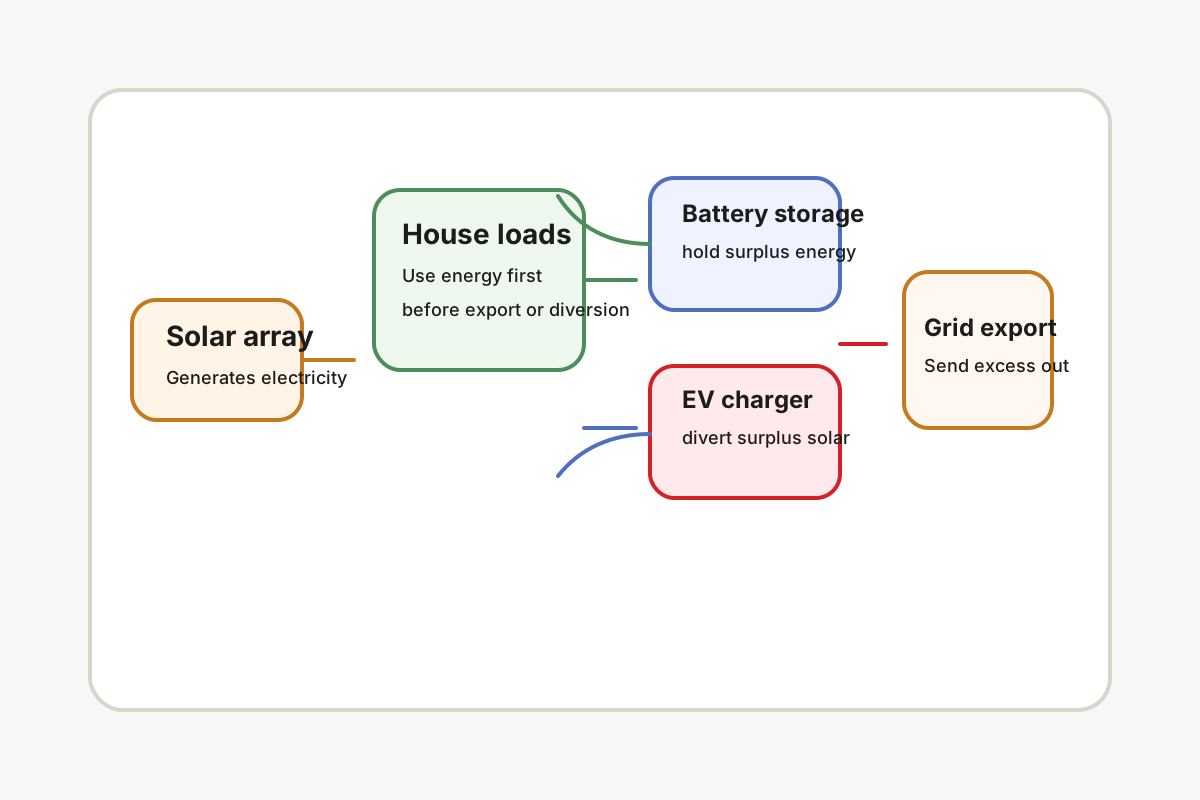
Solar charging decisions depend on whether generation is self-consumed, stored in a battery, diverted to the charger, or exported to the grid.
How They Interact
The Tesla Powerwall stores 13.5 kWh. A Tesla Model 3 Long Range battery is 75 kWh. A fully charged Powerwall provides roughly 18% of a full car charge — about 40-50 miles. The value comes from how you use it, not from directly filling your car.
Three Strategies
1. Solar + Powerwall + EV (Best Setup)
Solar panels generate during the day. Excess fills the Powerwall. In the evening, the Powerwall powers your home while the Tesla Wall Connector charges your car overnight at the cheapest grid rate via Octopus Intelligent Go.
On sunny days, surplus solar can go directly to the car via the Wall Connector — free motoring.
See our solar panels guide for the full economics.
2. Tariff Arbitrage (Without Solar)
Charge the Powerwall overnight at 8p/kWh. Discharge during peak (4-7pm) at 26.11p/kWh. That shifts 18.1p per kWh, so a daily 13.5 kWh cycle is worth roughly £890/year before round-trip losses.
Your EV charges directly from the grid during off-peak — the Powerwall handles the house, the grid handles the car.
3. Octopus Agile Optimisation
On Octopus Agile, the Powerwall can charge during negative or low price periods and discharge during expensive ones. Tesla’s app supports automated Agile price tracking.
The Tesla Ecosystem Advantage
If you own a Tesla car and Wall Connector, adding a Powerwall gives you single-app visibility and controls across solar, battery, home and EV charging. That is energy-system integration, not vehicle-to-home power flow from the car.
Cost and Payback
| Setup | Annual Savings | Cost | Payback |
|---|---|---|---|
| Powerwall only (arbitrage) | ~£890 | £8,000-10,000 | 9-11 years |
| Solar + Powerwall | ~£1,400-1,600 | £13,000-17,000 | 8-11 years |
| Full system + EV petrol savings | ~£2,800-3,200 | £14,000-18,000 | 5-6 years |
Should You Buy One?
Yes if: You have solar, want backup power, or value the integrated Tesla ecosystem.
Not yet if: No solar — switch to an EV tariff first (£517/year savings, zero cost). Budget limited — solar panels first, battery later.
The Bottom Line
The Powerwall integrates directly with the Tesla ecosystem. But for EV charging specifically, the biggest savings come from a smart tariff and home charger — not a battery. The Powerwall’s value is broader: whole-home energy management, solar storage, and backup power.
For more, see the solar + EV guide or the tariff comparison.
FAQ
Frequently asked questions.
Your next useful step: see the ranked solar-charger guide.